Product Description
| Shape |
Tube |
| Material |
Copper And Nickel |
| Hollow Section |
Circular |
| Range |
90/10 |
| Usage |
Industrial |
| Specification : |
| 90/10 Copper Nickel |
ASTM B 111 C 70600/ ASME SB 111 C 70600/ BS 2871 Part 3 CN 102/ EN 12451 CuNi10 Fe 1Mn/ NFA51 102 CuNi10 Fe1Mn/ JIS H 3300 C 7060 |
| 95/5 Copper Nickel |
ASTM B 111 C 70400/ ASME SB 111 C 70400/ BS 2870 CN 101/ ISO 1635 CuNi5Fe1MN/ JIS C 2532 GCN10 |
Exceptional Corrosion ResistanceThe CuNi10Fe1Mn alloy ensures outstanding durability against seawater corrosion and biofouling, making these pipes essential for high-performance marine and coastal engineering. Their chemical composition is finely tuned for longevity even in demanding, aggressive water environments.
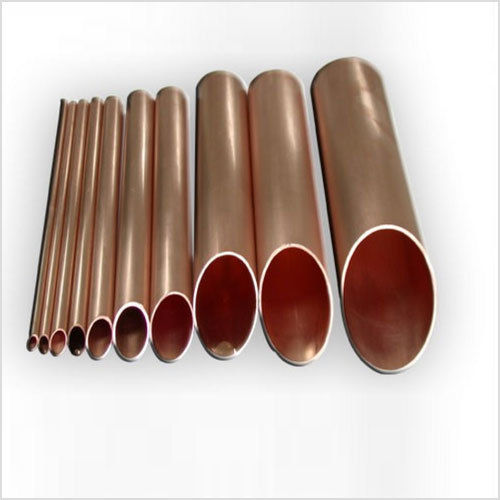
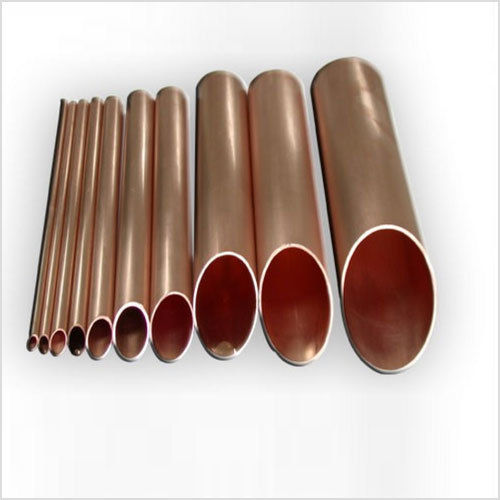
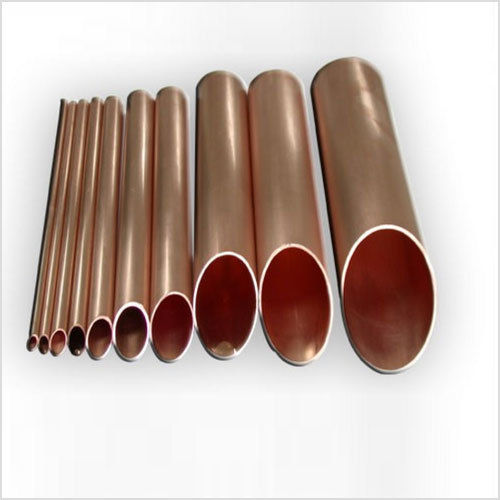
Flexible Sizes and End FinishesCustomers can select from a comprehensive range of outer diameters (12 mm to 254 mm) and wall thicknesses (0.7 mm to 12 mm), with options for plain, beveled, or threaded ends. Whether for standard or customized project requirements, these pipes offer versatile sizing for every application.
Advanced Manufacturing TechniquesProduced using cold drawn, extruded, or seam welded techniques, the pipes maintain high mechanical integrity and dimensional accuracy. Surface treatments include polished, annealed, or pickled finishes, ensuring a smooth exterior and improved performance in corrosive environments.
FAQs of EN 12451 CuNi10 Fe 1Mn - CW 352H 90/10 Copper Nickel Pipe:
Q: How is EN 12451 CuNi10 Fe 1Mn - CW 352H Copper Nickel Pipe manufactured?
A: These pipes are fabricated using cold drawn, extruded, or seam welded techniques to achieve the desired shape and size. The manufacturing process ensures precise dimensional control, mechanical strength, and surface integrity for high performance in marine applications.
Q: What are the main advantages of using CuNi10Fe1Mn 90/10 Copper Nickel Pipes in marine environments?
A: The main benefits are exceptional resistance to seawater corrosion, biofouling, and aggressive marine conditions. Their durability and mechanical strength make them ideal for shipbuilding, heat exchangers, condensers, and desalination plants.
Q: When should I choose seamless versus welded copper nickel pipes?
A: Seamless pipes are preferred for critical systems requiring superior pressure resistance and structural reliability, while welded pipes offer cost-effective solutions for non-critical uses or applications with less demanding performance criteria.
Q: Where are these copper nickel pipes commonly used?
A: EN 12451 CuNi10 Fe 1Mn pipes are widely used in shipbuilding, heat exchangers, marine engineering, condensers, and desalination plants, specifically where long-term resistance to seawater and corrosive environments is crucial.
Q: What is the chemical composition of CW352H 90/10 Copper Nickel Pipe?
A: The chemical composition includes Copper as balance, Nickel 911%, Iron 1.01.8%, and Manganese 0.51.0%. This blend provides the needed corrosion resistance, mechanical properties, and ductility for marine and industrial use.
Q: How are these pipes packaged for export and delivery?
A: Pipes are packed in seaworthy packaging, often using sturdy wooden cases to protect them from physical damage and moisture during transit. This ensures safe delivery to international and domestic project sites.
Q: What sizes and finishes are available for this product?
A: Outer diameters range from 12 mm to 254 mm, with wall thicknesses up to 12 mm and lengths reaching 6 meters or as per custom requests. End finishes include plain, beveled, and threaded, with surface options such as polished, annealed, or pickled.












 Send Inquiry