Product Description
JIS 3250H C6782 or C6783 High Tensil Leaded Brass
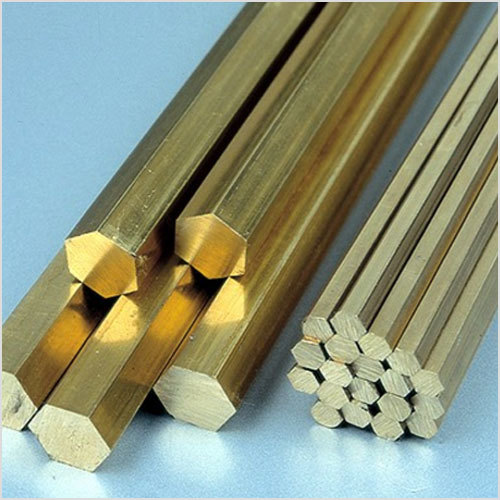
We are one of the leading manufacturers, exporters and suppliers of a premium quality assortment of High Tensile Brass Rods, Brass Extrusion Rods. Offered in different sizes, thicknesses and grades, these are valued for their excellent performance, high conductivity, durability, reliable operation and corrosion resistance. At par with the prerequisite industry standards, our High Tensile Brass Rods can be purchased by clients in standard & customized specifications and at cost effective rates.
| Specification : |
| High Tensile Brass | IS 320 HT1 or HT2 BS 2874 CZ114 or CZ115 JIS 3250H C6782 or C6783
|
Specifics :
BS:1001
HT12472
IS:320 l & ll
| Chemical Requirements | HT1 | HT2 |
| Copper | 56.0 - 60.0% | 56.0 - 61.0% |
| Lead | 0.20 to 1.50% | 0.50 to 1.50% |
| Iron | 0.20 to 1.25% | 0.20 to 1.50% |
| Tin | 0.20 to 1.0% | 1.0% max |
| Aluminum | 0.2% max | 0.30 to 2% |
| Manganese | 0.25 - 2.0% | 0.50-2.0% |
| Total Imp. | 0.50% max | 0.50% max |
| Zinc | Remainder | Remainder |
| Physical Properties |
| Condition | Size | T.S. MPa | EL% Min | T.S. MPa | EL% Min |
| As manufactured | All Size | 430 min | 20% | 460 min | 20% |
| Cold-worked & Stress | 10-40 | 480 min | 12% | 520 min | 12% |
| Relieved | 40 above |
|
| 500 min | 15% |
| Fabrication Properties |
| Capacity for being |
|
|
| Cold formed | Poor | Fair |
| Hot worked | Good | Good |
| Machinability Rating | 30% | 30% |
| Resistance to Corrosion | Excellent | Excellent |
| Suitability for soldering | Excellent | Fair |
| Uses |
| HT1 is suitable for Soldering |
| Ht2 is suitable for Machining |
Superior Mechanical PropertiesJIS 3250H C6782/C6783 High Tensile Leaded Brass delivers outstanding mechanical performance, with a minimum tensile strength of 490 MPa and elongation of at least 20%. This makes it an ideal choice for components subjected to high stress and demanding operating environments.
Versatile ApplicationsThe alloys unique combination of machinability, electrical conductivity, and corrosion resistance allows it to be used across various sectors, including automotive parts, electrical connectors, engineering components, fasteners, and marine hardware. Its adaptability ensures reliability and longevity in critical applications.
Precision Manufacturing & Export QualityProduced through advanced extrusion and drawing methods, these brass rods, available in round, hex, and square shapes, maintain consistent diameter tolerances (0.05 mm) and standard lengths (3 or 6 meters). Each batch is packed using export-worthy materials to safeguard quality during transport.
FAQs of JIS 3250H C6782 or C6783 High Tensil Leaded Brass:
Q: How is JIS 3250H C6782/C6783 High Tensile Leaded Brass manufactured?
A: This brass alloy is typically produced using extrusion or drawing processes, which enable precise control over dimensions and properties. The hard temper ensures structural integrity and durability, while the bright, polished finish is achieved during the final manufacturing stages.
Q: What applications are suitable for this high tensile leaded brass?
A: Its excellent machinability, strength, and corrosion resistance make it well-suited for automotive, electrical, engineering, fastener, and marine components, where reliability and precision are paramount.
Q: When should I choose this material over other types of brass?
A: Opt for JIS 3250H C6782/C6783 when high tensile strength, precise tolerances, and enhanced machinability are required, especially for components exposed to demanding mechanical and environmental conditions.
Q: Where are these brass rods typically exported from?
A: The alloy is most commonly manufactured, supplied, and exported from India, ensuring compliance with international standards and providing global availability for diverse industrial needs.
Q: What is the process for ordering custom sizes or different shapes?
A: Custom orders can be placed for specific lengths (3 or 6 meters, or as required), diameters (2 mm to 100 mm), and shapes (round, hex, square). Suppliers offer flexibility to accommodate project-specific requirements.
Q: How does the lead content benefit the materials performance?
A: The presence of 1.0%2.5% lead enhances the alloys machinability, allowing for smoother and more efficient cutting or drilling processes, which is particularly useful in manufacturing intricate or precision parts.











 Send Inquiry